
Why We Invested in Smylo: Cat Parenting in India Has Evolved. The Cat Food Aisle Has Not.
Why We Invested in Smylo: Cat Parenting in India Has Evolved. The Cat Food Aisle Has Not.
We Love Everything About Pets
At DSGCP, we have been tracking and investing in the pet care category since 2012. This is not a new area for us. It is one of our highest conviction themes. We believe pet care will be one of the most enduring consumer categories to emerge in India over the next decade.
That belief has been shaped by years of on-the-ground engagement. We co-hosted the India edition of Unleashed by Nestle Purina. We incubated Supertails, India's one-stop platform for pets. And now we have incubated a cat food brand from the ground up with Smylo. Together, these investments reflect a clear and simple conviction: as pets are increasingly treated as family members, the centre of value in pet care will shift decisively towards nutrition-led brands built around trust and long-term health.
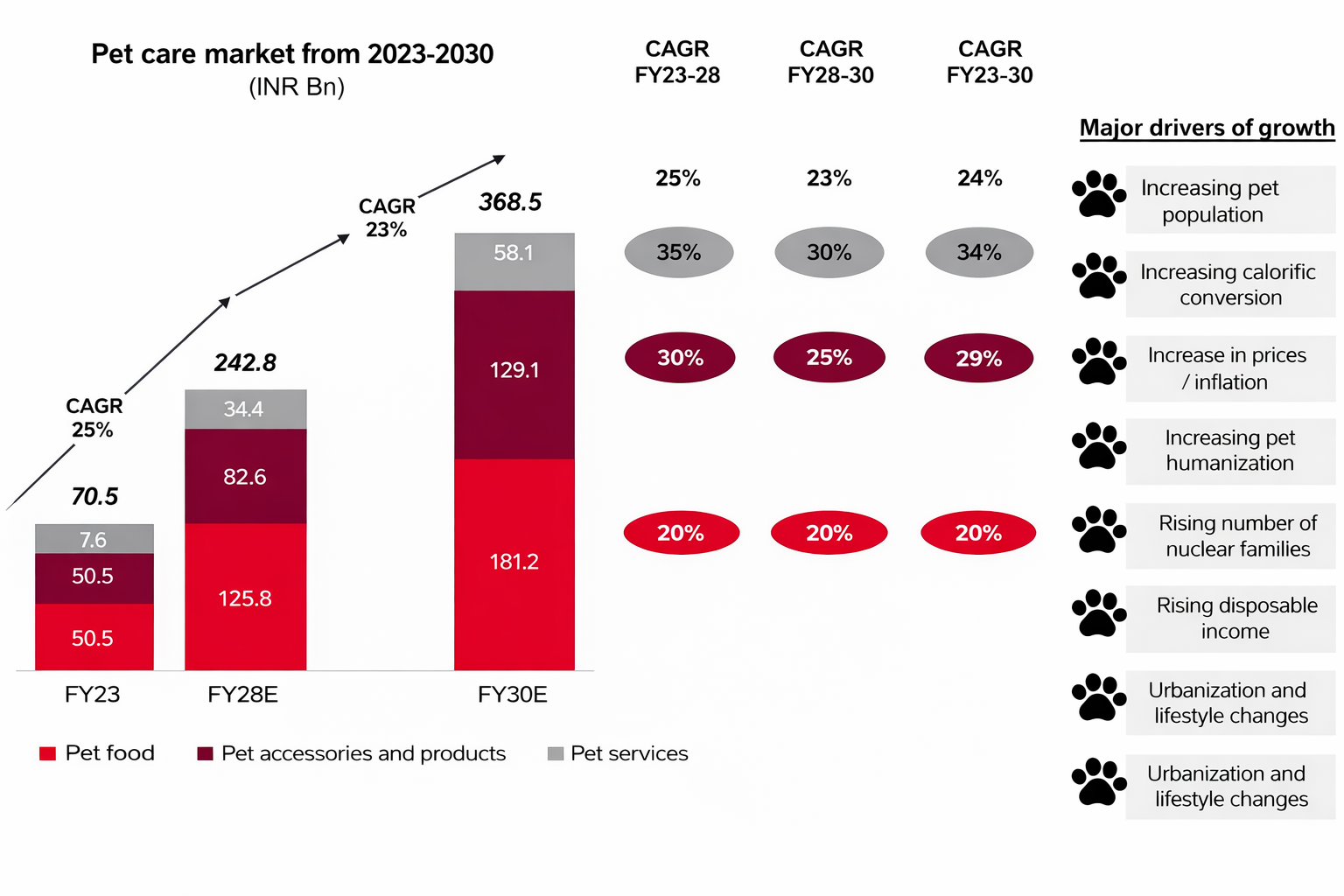
The data makes one thing clear: the market is here and now.
India's pet care market is growing rapidly. Rising pet ownership, urbanisation, nuclear households, and the increasing humanisation of pets are all driving this growth. Pet food already represents the largest and fastest-growing component of this market. It is a recurring, habit-driven category with predictable consumer behaviour.
The Cat Opportunity Is Massive and Largely Untouched
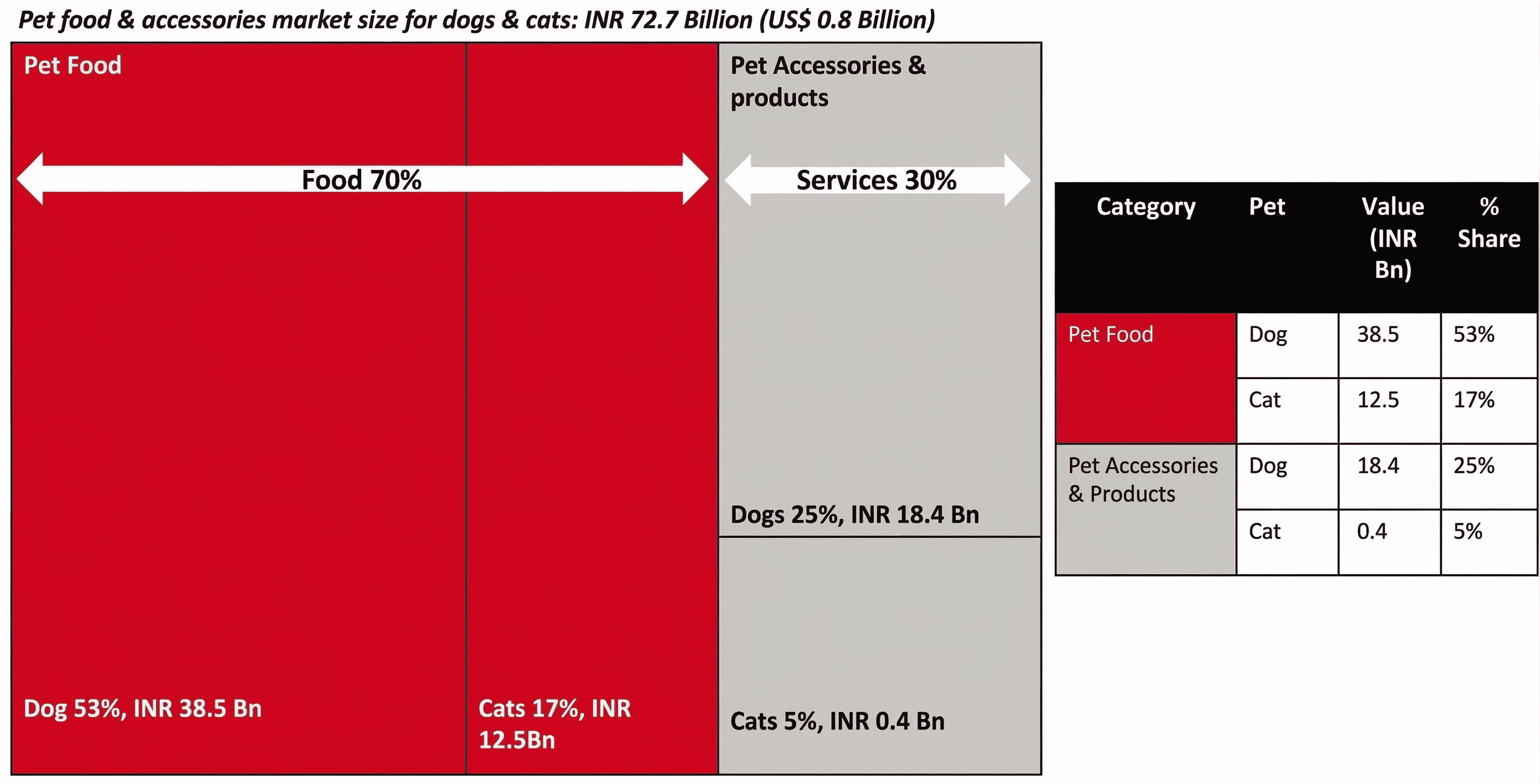
While dogs account for the majority of pet food value today, cats represent a structurally under-penetrated opportunity. Despite rising adoption in urban India, cat food remains a disproportionately small part of the overall market. Both in absolute size and in depth of choice, the cat segment has been underserved.
This imbalance is not a demand problem. It is a category design problem.
Globally, cat ownership is projected to match or exceed dog ownership. We want to build the best quality food brand for cats in India before that wave arrives.
Dog food in India has begun its journey towards better nutrition. The first real chapter of cat food is being written right now.
Why Cat Food Is Structurally Different
Cats are obligate carnivores with non-negotiable nutritional needs. They require taurine, high-quality animal protein, and adequate moisture intake. Home-cooked diets do not translate easily, especially in vegetarian households, and feeding errors compound quickly over time. For cats, packaged food is not a convenience. It is the primary source of nutrition.
This places a far higher burden on formulation. Cat food cannot scale on distribution alone. In this category, formulation must lead.
This is what makes cat food fundamentally different from the first phase of dog food in India. The next generation of category-defining brands will be built on nutritional credibility, not just reach.
Pet Food 1.0 Scaled on Distribution. Pet Food 2.0 Will Scale on Formulation.
India already has proof that pet food can scale into a large, durable category. Drools is a clear example. Over the past decade, Drools built one of the largest pet food brands in the country, anchored in dog food, strong offline distribution, and broad price accessibility. Its success validated three important truths about the Indian market.
First, Indian pet parents are willing to shift from home food to packaged nutrition once trust and availability are established. Second, petfood is not a discretionary purchase. It is habit-driven and recurring. Third, once distribution is cracked, the category compounds. Drools achieved unicorn status in 2025 and is featured in DSGCP and Bain's InsurgeX Index. Nestle, one of two global category leaders in pet food, invested in Drools alongside L Catterton in 2025.
At the same time, Drools' journey also highlights what comes next.
Pet Food 1.0 in India scaled on distribution. Early growth, particularly in dogs, was driven by reach, price accessibility, and SKU breadth. Dogs are biologically adaptable and can thrive on a wide range of diets. The bar for good-enough nutrition was lower, and distribution could lead.
Pet Food 2.0 is formulation-led. As the category matures and pets are increasingly humanised, growth is being driven less by availability and more by nutritional intent. It mirrors the premiumisation that we have already seen in human packaged food. This shift is already visible globally and is now taking shape in India.
The transition is most pronounced in cats.
Distribution Is No Longer the Bottleneck
The shift to quick commerce and digital-first pet platforms has fundamentally changed how pet food is discovered and bought. High-frequency replenishment, predictable usage, and time-sensitive purchases fit naturally with quick commerce and e-commerce.
For cat food, where feeding routines are fixed and switching costs are high, this shift is especially powerful. Digital platforms reduce friction at the point where trust and repeat behaviour are formed. Brands can now scale through habit rather than distribution breadth.
DSGCP has partnered with Supertails, a one-stop shop for pets in India. Supertails has helped accelerate the shift from home food to packaged nutrition in urban India while giving emerging brands a faster route to repeat-led scale.

This shift does not replace formulation-led differentiation. It amplifies it.
A Proven Global Playbook, Now Taking Shape in India
Globally, pet food has already moved through its first major transition: from shelf-stable convenience to nutrition-forward, health-led formats. This shift was driven by a structural change in how pets are perceived. They moved from animals to be fed leftovers to family members whose long-term health matters deeply.
Strategic incumbents have followed this thesis. Nestle and Mars together control most of the global pet food market, which exceeds USD 130 billion annually. Both have repeatedly invested in brands built on trust, repeat behaviour, and nutritional credibility, recognising pet food as along-duration, habit-driven category.
Within this evolution, cat food has emerged as a distinct, science-led segment. Mars' multi-brand cat portfolio spanning Whiskas, Sheba, Royal Canin, and IAMS reflects this belief, with deliberate differentiation across price points, formats, and life-stage needs. Similarly, Nestle's long-term investment in Purina underscores the view that cat nutrition is a daily health intervention, not a discretionary purchase.
Insurgent brands reinforce the same lesson. In the US, Fresh pet scaled from a niche concept to nearly USD 1 billion in annual revenue by redefining daily feeding through fresh, hydration-forward formats. Blue Buffalo built a clean-label, health-led proposition that culminated in a USD 8 billion acquisition by General Mills.
Across markets, the pattern is consistent. Cat food evolves faster once pets are humanised. Hydration, protein quality, and formulation integrity become non-negotiable. Strategic capital follows brands that earn trust through daily feeding behaviour.
India is now entering this phase.
The Indian Cat Food Market Is Polarised, Not Competitive
The Indian cat food market is not crowded. It is split. Today, cat parents effectively choose between two extremes.
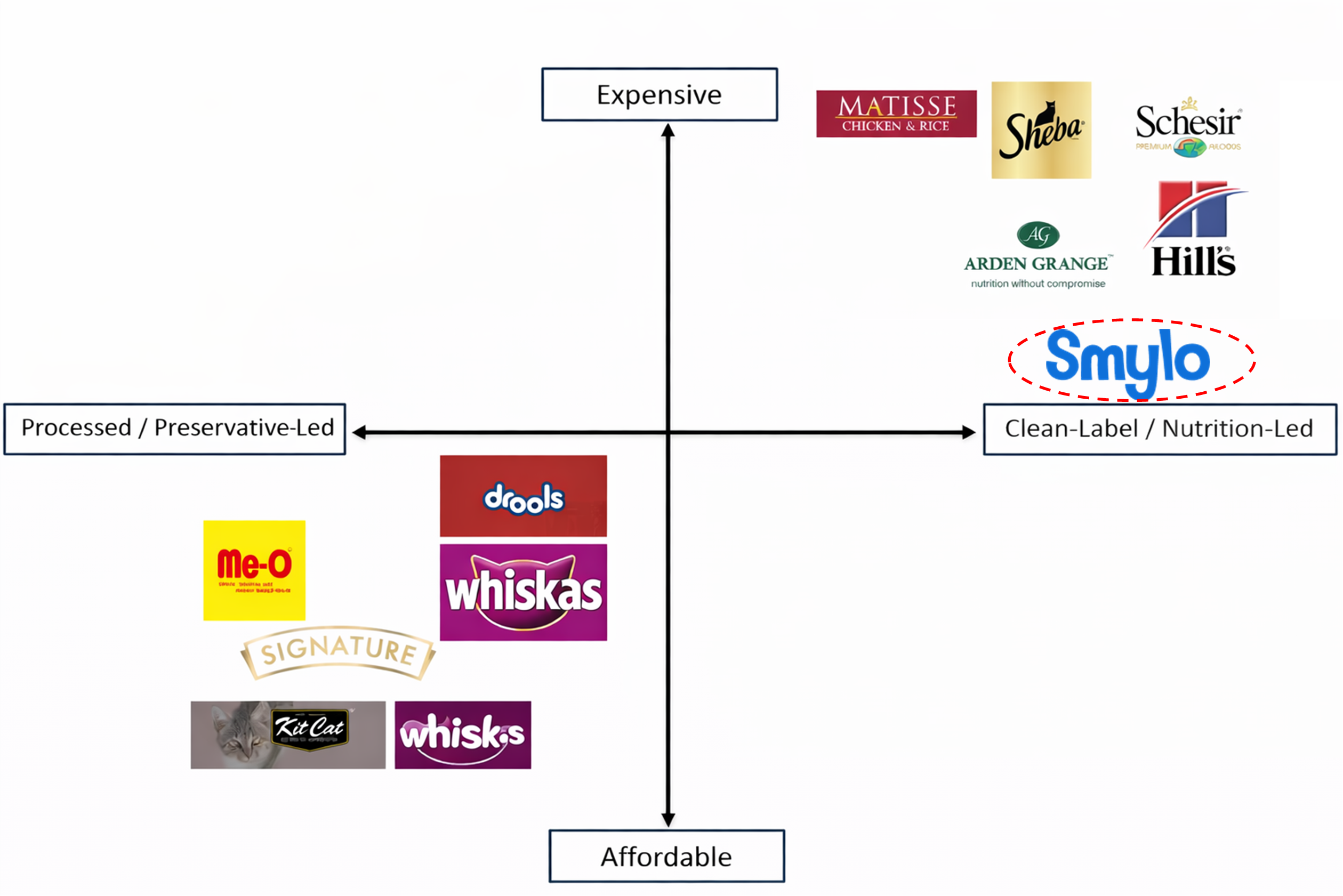
At one end sit affordable, processed products. Mass-market brands such as Whiskas and Me-O dominate this segment, priced around INR 200 to 250 per kg. They are widely available and often serve as the entry point into packaged feeding. The trade-off is nutrition: grain-heavy, preservative-led formulations optimised for shelf life rather than feline health. These products drive volume, not confidence.
At the other extreme are premium, imported nutrition brands. Players such as Royal Canin, Hill's, Arden Grange, Schesir, and Sheba offer strong formulations and higher meat content, but at INR 900 per kg and above. Quality is not the constraint. Everyday affordability and consistent access are.
The INR 300 to 400 per kg segment remains unaddressed. This is where the premiumising cat parent sits: informed enough to move beyond mass products, but unwilling to rely on premium brands for every meal. This is where category growth will concentrate. And this is the space Smylo is built to own.
If it is not human-grade, why feed it to a family member?
What Smylo Is Building
Smylo is a nutrition-first brand for cats. Recipes are developed in collaboration with veterinary scientists and animal nutritionists, aligned with global AAFCO and FEDIAF guidelines, and designed for everyday feeding rather than occasional supplementation.
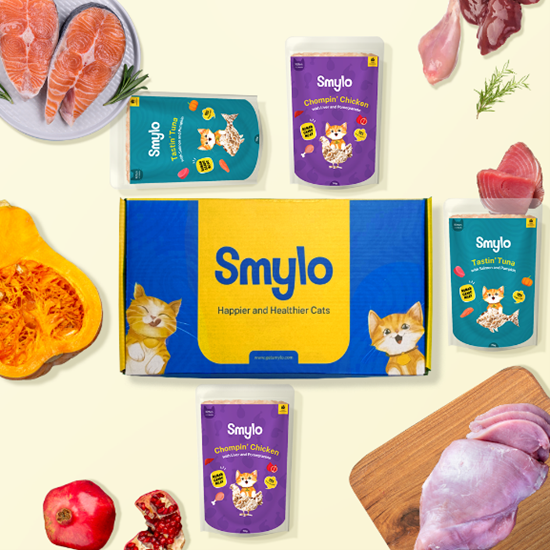
The differentiation is deliberate and uncompromising. Smylo uses clean-label, preservative-free formulations with no artificial flavours. The brand prioritises higher meat content over grain fillers. And it puts hydration first, with wet food at the core of the portfolio to support kidney and urinary health.
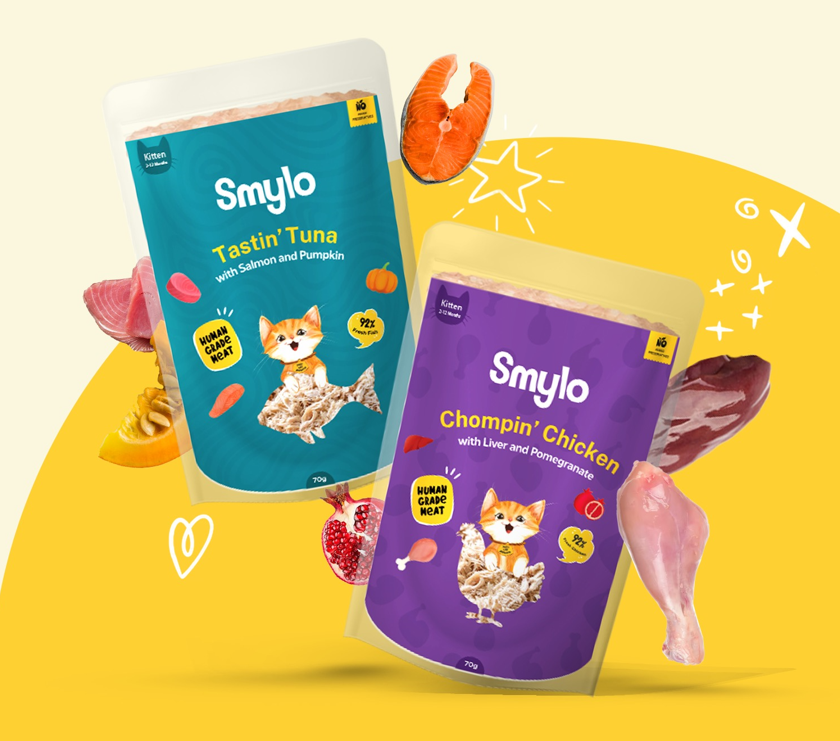
This focus is already showing up in consumer behaviour. Smylo's wet food is the primary revenue driver. Products such as Tastin' Tuna with salmon and pumpkin have emerged as consistent bestsellers. A large majority of customers report visible health improvements in their cats after switching. That is early validation that when formulation is done right, trust compounds over time.
We Literally Incubated This Brand With the Founders
At DSGCP, one of our favourite things to do is to build brands before they exist. We love getting in pre-product, working with founders on the thesis, the category, and the early positioning. That is what we did with Smylo.
We partnered with Smylo in April 2024, before launch, with conviction in Abhishek and Kartikeya and the category. From day one, we were not just investors. We were co-thinkers on what this brand could become.
Finding the right founders for a mission this specific is hard. Abhishek (ex-Titan Capital) and Kartikeya (ex-Arkam Ventures) were both investors before starting Smylo. They know exactly where consumer brands break. They are also avid pet parents themselves. That combination of investor rigour and lived experience is rare. Kartikeya's family background in the equestrian segment adds another layer of depth to how seriously he thinks about animal care.
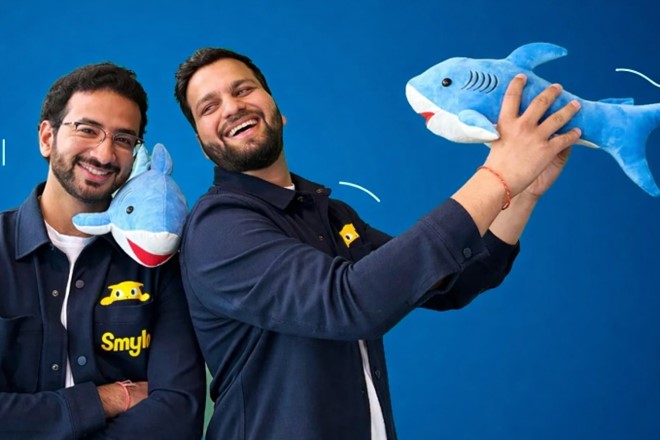
What drew us to them was not just their background. It was their irrational passion for the mission. They were not starting a pet food company because it was a good market. They genuinely believed that cats in India deserved far better than what they were getting. That kind of founder energy is rare and it is what we look for when we incubate brands at this stage.
Before launching a single SKU, Abhishek and Kartikeya built two of India's largest organic pet communities: Dogs day out and House of Cats. With over 80,000 followers acquired entirely through organic engagement, they did not start with a product. They started with a conversation. By the time Smylo's first products hit the market, they already had a high-trust audience waiting.
Our Conviction
Early signals have reinforced our decision to back them early. Smylo was the runner-up at Nestle Purina's Unleashed pitch programme in October 2025 and has delivered strong early traction with healthy unit economics and strong repeat behaviour.
As pets continue to be humanised, the gap between how cats are treated and how they are fed will only become more visible. That gap creates space for brands willing to raise the bar quietly, consistently, and with intent.
We believe the next phase of India's pet food market will not be defined by who scales distribution fastest. It will be defined by who earns trust in the bowl, every single day.
Dog food in India has begun its journey towards better nutrition. The first real chapter of cat food is being written now.
We are excited to double down on our investment in Smylo and on Abhishek and Kartikeya as they build what we believe will be India's defining cat food brand.
Stay informed with our newsletter
Discover insights, perspectives, and the latest happenings in the consumer ecosystem.
Stay informed with our newsletter
Discover insights, perspectives, and the latest happenings in the consumer ecosystem.


Related articles
.webp)
.webp)

Related articles



Explore more Podcasts


