
Why We Invested in Henfruit: Turning India's most unbranded staple into a food-safety-led brand
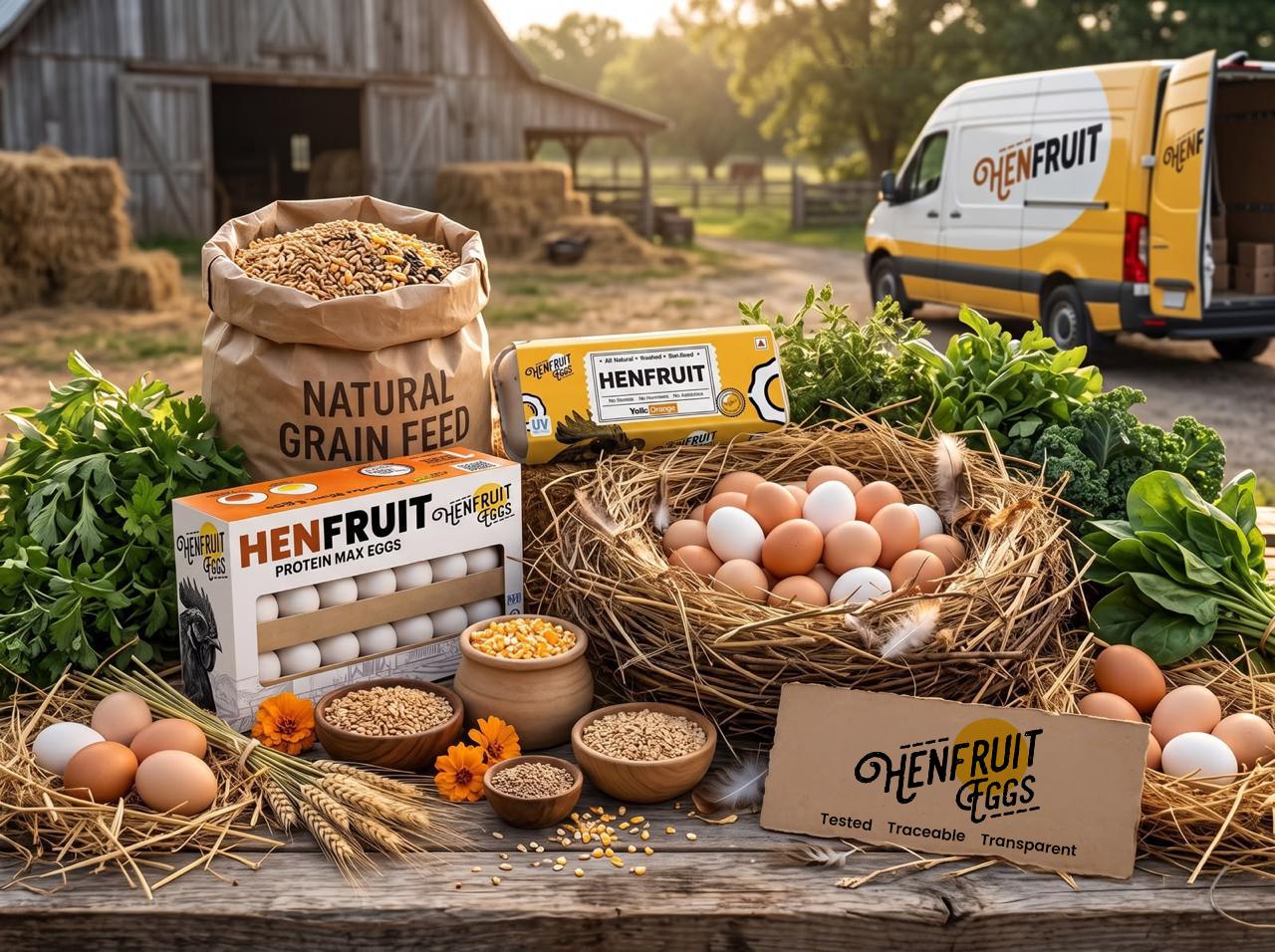
Why We Invested in Henfruit: Turning India's most unbranded staple into a food-safety-led brand
We are pleased to announce our investment in Henfruit, India's largest branded egg company, founded by Tarun Gupta, alongside Lok Capital and RPSG Capital Ventures.
Why we invested - In a nutshell
- Founder fit: Tarun brings more than three decades of family experience in poultry and has spent over a decade building Henfruit. His personal phone number is still on the website, and he is now building the leadership team to take the company to its next phase.
- Market: Eggs are one of India's last major unbranded staples, and the category still competes on cosmetics (shell colour, yolk shade, unverified fortification) rather than safety and freshness. Rising protein consumption, with eggs as the most affordable high-quality source, adds a long-term tailwind.
- Product obsession and backend focus: Tarun invested in automated centralised processing years before scale justified it. The same obsession runs through daily testing across 11 antibiotic families, compensating farmers so they hold back eggs through withdrawal periods, batch-level traceability, and building India's only FSSC 22000-certified egg processing facility. Publishing lab results every day turns that backend into a visible reason to trust the brand, and it is hard to replicate quickly.
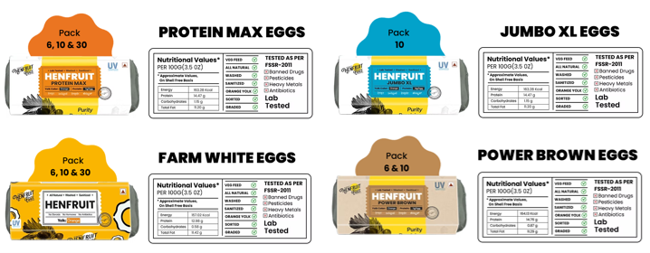
The Last Unbranded Staple
Indian consumer categories have moved from loose to branded in cycles: milk, edible oil, atta and spices. Eggs have not. India's egg market is worth USD 8-9 billion, yet only 3.4% of eggs are sold packaged, and 60-70% of that packaged share is unbranded commodity packaging. Branded packaged eggs account for roughly 1% of the total market, against branded penetration above 70% in developed markets.
At the farm gate, an egg is a commodity. The opportunity lies in what happens after the farm gate: cleaning, testing, traceability and distribution. That is a trust problem, not a product problem, and it is one of the last large staple categories in India where the shift from loose to branded has barely begun.
Premium on the Wrong Attributes
Walk down any modern-trade aisle or open a quick-commerce app and the egg category looks remarkably similar: brands competing on brown versus white shells, deeper yolks, and claims around DHA, Omega-3 and other nutritional benefits. Many of these claims are less meaningful than they appear. Shell colour comes down to the breed of hen, nothing else. A deeper yolk usually just means more maize or marigold in the feed, and occasionally an additive with no nutritional value at all, and there is no way for a buyer to tell the two apart by looking. Fortification claims are routinely made without any disclosed quantity or independent verification. Consumers are being asked to pay a premium for attributes that are either meaningless or impossible to check.
The category has largely competed on the wrong attributes. The two things that actually determine whether an egg is worth paying more for, freshness and safety, are the two attributes that remain poorly addressed by most of the market.
What Actually Matters: Safety and Freshness
An egg starts decaying the moment it is laid. It is not a shelf-stable commodity. The risk an egg carries by the time it reaches the consumer is largely determined by two factors: time and temperature. A loose egg that has spent over a week moving through unrefrigerated trucks and open-air storage across an Indian summer is indistinguishable, by sight, from one collected yesterday. There is no way for a buyer to know which one they are holding.
The second risk is antibiotic residue. Recent concerns around antibiotic residues in branded eggs, and the subsequent nationwide regulatory scrutiny, have brought food safety into sharper focus. Most of India's eggs pass through several traders before they reach a shop, and a brand sourcing this way does not control what happens inside the farm gate on any given day. When a hen is treated with antibiotics, its eggs should not be sold for a prescribed withdrawal period, usually more than a week. However, following this period depends on the farmer, who loses income for every day those eggs are held back. India also has nothing resembling the shell-stamped codes that let European regulators trace a contamination event back to a specific farm. Most Indian eggs, branded and unbranded alike, cannot be traced with that precision.
A Processing Moat Built for the Trust Problem
Henfruit does not own farms. It runs a contract-farming model across 16 farms, but addresses the industry's core vulnerability by channelling every egg through its own centralised grading and packing infrastructure before it reaches a shelf, most notably the MOBA Omnia 330, a Netherlands-sourced automated line that Henfruit is, to our knowledge, the only Indian egg company currently operating. Every egg is screened for more than 20 defects, washed, UV-sanitised, weighed and graded.
On top of that sits a three-layer antibiotic control system: a dedicated vet visiting every contracted farm every 10 days, daily in-house testing across 11 antibiotic and banned-substance families, and independent third-party verification, with results published publicly every day. If antibiotics are prescribed, Henfruit suspends collection from that farm through the treatment period, the withdrawal period, and an added safety buffer, and compensates the farmer for the gap, removing the exact economic incentive that makes withdrawal-period non-compliance a systemic risk elsewhere. In February 2026, Henfruit became the first and only FSSC 22000-certified egg processing facility in India, and its proprietary Egg Track system gives it batch-level traceability that most of the industry still does not offer.
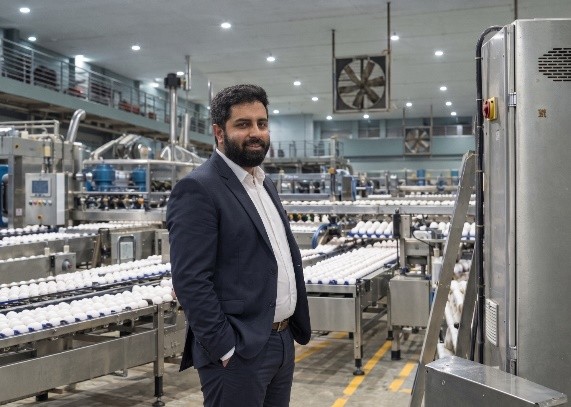
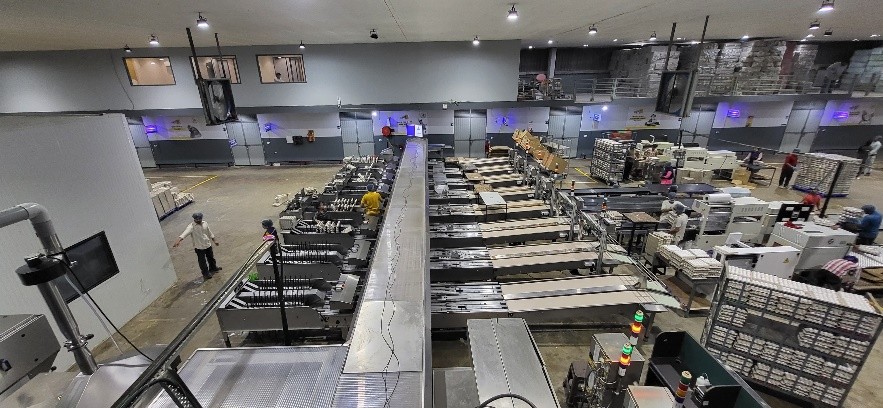
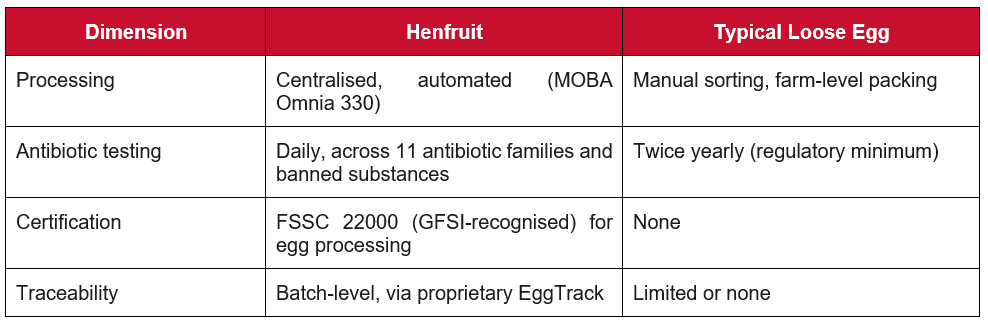
The processing equipment itself can be replicated. The harder advantage lies in Henfruit’s farmer network, testing protocols, operating discipline and GFSI-recognised certification - all of which take time to build and institutionalise.
Global Precedents for the Model
Vital Farms provides the clearest global precedent for the model Henfruit is building. The US-listed company works with more than 600 partner farms while retaining control over processing and quality, and generated USD 759 million of revenue in FY2025. Pete & Gerry’s provides another close analogue, having built an estimated ~USD 460 million premium egg platform through a network of more than 350 family farms and owned processing infrastructure. Noble Foods in the UK follows a hybrid model, sourcing through a combination of company-owned farms and independent producers while controlling packing, quality, branding and distribution, and generated ~£350 million of revenue in FY2025.
These examples show that the value in eggs does not need to sit at the farm level. Scaled businesses have been built by organising fragmented supply and controlling the processing, quality and brand layers. That precedent is particularly relevant in India, where the egg market remains overwhelmingly unbranded and fragmented, leaving room for Henfruit to build a trusted national brand on top of an existing farmer base.
Strong Founder Market Fit
Tarun Gupta is building on more than three decades of family experience in poultry. In 2014, Tarun started with INR 5 lakh borrowed from his father in a 400-square-foot storeroom, and mortgaged his house to import the European grading line. He is on a mission to build the No. 1 Egg Brand in India.
Having spent the last decade proving the model himself, Tarun is now building the organisation required for Henfruit’s next phase of growth, with senior leadership across production, procurement and finance. This progression - from founder-led execution to institution-building, while retaining the operating intensity that brought the business this far, is a key reason for our conviction in both Tarun and Henfruit.
Looking Ahead
Going forward, we are delighted to partner with Tarun to strengthen Henfruit’s leadership team, build the brand and develop new products, while Henfruit continues to invest in the infrastructure that underpins consumer trust: testing, traceability and transparency.
In ten years, we think buying a loose egg will feel similar to the way buying loose milk or loose atta feels today. We want the name on the carton to be Henfruit.
Stay informed with our newsletter
Discover insights, perspectives, and the latest happenings in the consumer ecosystem.
Stay informed with our newsletter
Discover insights, perspectives, and the latest happenings in the consumer ecosystem.


Related articles


Related articles


Explore more Podcasts


